
Free
Rome, Italy
Rome in 4 days
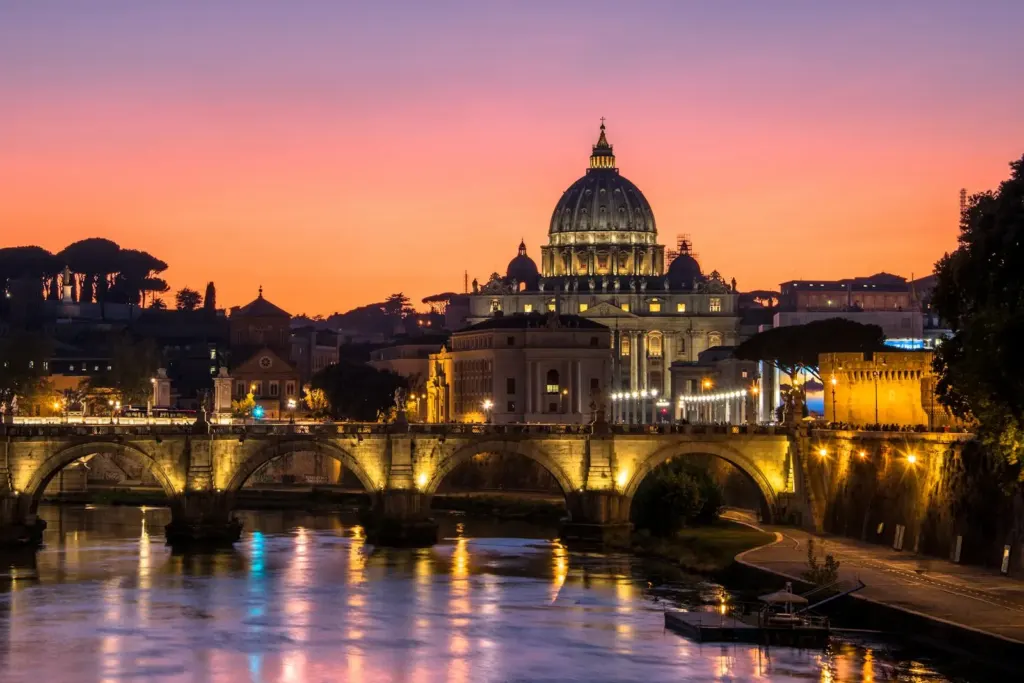
Is 4 days enough for Rome? Yes, and for many first-time visitors it is the most comfortable length. You can do the three big blocks (ancient Rome, the Vatican, the Borghese and baroque centre) at a relaxed pace and still have a fourth day for a Lazio day trip to Tivoli or Ostia Antica, or for a slower day among Rome’s neighbourhoods.
This 4-day Rome itinerary keeps the first three days in line with our three-day plan, then adds the choice on day four. If you have one more day, see Rome in 5 days; with fewer, the two-day plan trims it. Not sure how many days you need? Read how many days in Rome.
Book these first
With four days you have time to choose better slots, so use that advantage.
- Vatican Museums. Book your date first, as the museums are closed on Sundays except the free last Sunday of the month (official hours page). See Vatican Museums tickets and tours.
- Borghese Gallery. Entry is by reserved timed slot only, and some days go quickly. See Borghese Gallery tickets. The gallery is usually closed on Mondays, so check the day before you plan around it.
- Colosseum, Forum and Palatine. Timed entry, ticket in the holder’s name, according to the Colosseum’s official site. See Colosseum tours.
- Day trip. Book once you know which day is dry and free.
A practical rule is to put your two fixed-slot sights (Vatican and Borghese) on days with no other fixed ticket, and let the Colosseum slot flex around them.
Day 1: ancient Rome
Colosseum, Forum, Palatine
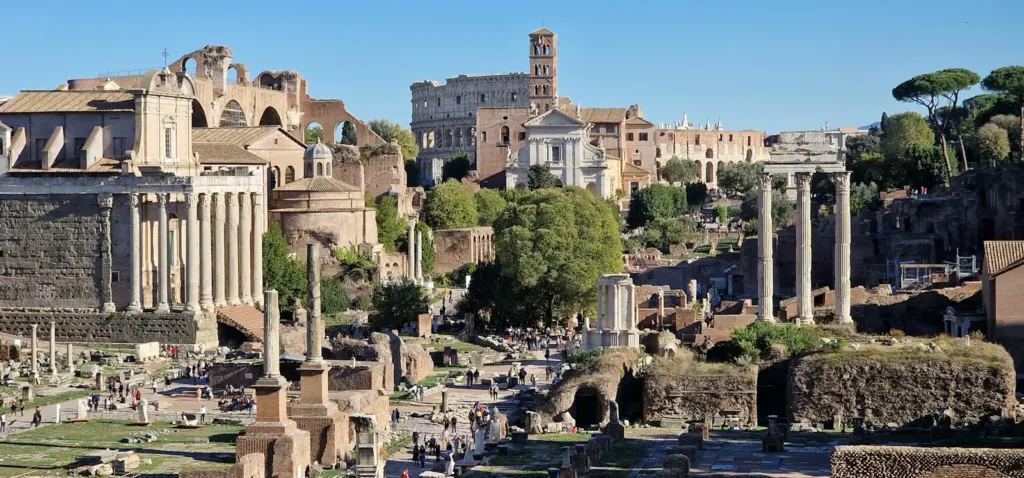
Start with the first slot at the Colosseum. If you want extra access, the Colosseum Underground and Arena Floor tour (from EUR 89) adds the arena floor and lower levels. Then continue through the Roman Forum and Palatine Hill on the same combined ticket. See the Colosseum guide and the Forum and Palatine guide.
Afternoon: Capitoline and the Ghetto
After lunch in Monti, walk to the Capitoline Museums and the terrace above the Forum. Then drop down to the Jewish Ghetto for the Portico d’Ottavia and an early dinner or snack; see the Jewish Ghetto guide. This keeps the day in one geographic block.
Day 2: the Vatican
Take the earliest museum slot, cross the Sistine Chapel and finish in St Peter’s Basilica, a free-entry site with a dress code and a security queue. After lunch in Prati, walk to Castel Sant’Angelo and the Tiber. See the Vatican City guide, our Vatican timing and tactics, the small-group Sistine Chapel highlights tour (from EUR 79) and the Castel Sant’Angelo guide. Evening: a quiet dinner; this is a heavy day.
Day 3: Borghese and the baroque centre
Morning: Borghese Gallery
A small gallery with outstanding Bernini sculptures and Caravaggio paintings. Book a morning slot so you can walk in Villa Borghese afterwards. See the Borghese Gallery guide and the guided tour (from EUR 69).
Afternoon: Spanish Steps, Trevi, Pantheon, Navona
From Villa Borghese walk down to the Spanish Steps, then the Trevi Fountain, the Pantheon and Piazza Navona. Everything is within about 20 minutes of the next stop. See the Trevi Fountain and Spanish Steps guide and Pantheon and Piazza Navona. Check current entry arrangements for the Pantheon.
Evening: Trastevere
Cross the river for dinner. See the Trastevere guide or take the Trastevere Food Crawl (from EUR 79).
Day 4: choose your finish
This is where four days beats three. Pick one of three options, depending on energy and weather.
| Option | Best for | Time | Effort |
|---|---|---|---|
| Ostia Antica | Ancient Rome fans who want fewer crowds | Half day (about 4 hours for our guided visit) | Low |
| Tivoli: Hadrian’s Villa and Villa d’Este | Gardens, fountains and big ruins | Most of a day (our tour is about 7 hours) | Medium |
| Rome neighbourhoods: Appian Way, catacombs, Testaccio | Slow travellers, no transport stress | Full day, flexible | Low to medium |
Option A: Ostia Antica
Rome’s ancient port is well preserved and usually less crowded than the Forum. A guide makes it much easier to read. See the Ostia Antica guide and the guided visit (from EUR 59). Combine it with an afternoon on the beach side or a relaxed dinner back in Rome.
Option B: Tivoli
Hadrian’s Villa is a vast imperial retreat; Villa d’Este has Renaissance gardens and fountains. They are about an hour from Rome, so a full day works. See Tivoli and the Tivoli tour (from EUR 85). Wear walking shoes: both are large.
Option C: a slower neighbourhood day
Spend the morning on the Appian Way and in the catacombs (guided visits only, so book ahead), then go to Testaccio for lunch and the market. See the Appian Way guide, catacombs tours, the Testaccio guide and the Testaccio market tasting (from EUR 69).
Skip Pompeii, Florence and the Amalfi Coast on a four-day visit unless day trips are your priority: each takes 12 hours or more, and Pompeii is a little over two hours each way from Rome. If you really want one, the next page up, Rome in 5 days, handles it better, and the Pompeii day trip page explains the logistics.
How to choose between the day-4 options
Choose the day trip if the weather is good and you want a change of scene; choose the neighbourhood day if you are tired, travelling with children or older relatives, or if the forecast is poor. A few more thoughts on each:
- Ostia Antica is the lowest-friction option. It is reached by a short regional train and shares the “ancient Rome” theme with day 1, so it works best for visitors who loved the Forum. The site is large and mostly outdoors, with limited shade, so bring water and a hat in summer.
- Tivoli pairs two very different sites: Hadrian’s Villa, a spread-out imperial estate, and Villa d’Este, a Renaissance palace with terraced gardens and fountains. It is a better choice than Ostia for people who like gardens and views, and it suits families with older children. Check each site’s current hours; they differ and some close on set days.
- The neighbourhood day is the best choice for food lovers. The catacombs are cool and underground, so they work even in summer or rain, and Testaccio is arguably the best lunch district in Rome. You also avoid the cost and logistics of a long return journey.
All three finish in time for a normal Roman dinner. If you are still undecided, read Rome day trips: where to go and how.
Evenings across the four days
Evenings are what separate a good Rome trip from a tiring one. Try not to book dinner at the end of a long day on the same night as an early start. Day 1 ends in the Jewish Ghetto with a meal; day 2 can stay quiet, perhaps with an early dinner and an early night before day 3; day 3 gives you Trastevere, which is lively and best on a day with a late start. If you have energy left on day 1 or day 4, consider a night walk such as the Rome by Night walking tour (from EUR 39) or a Tiber river sunset cruise (from EUR 29). More ideas in best night tours in Rome and in our guide to Rome at night.
Swapping days around
Four days is flexible, but a few swaps work better than others.
- Swap day 1 and day 3 if your Borghese slot is only available at the start of the trip. Keep the Vatican away from the first morning if you arrive tired.
- Move the day trip earlier if the forecast is dry early in the week. Then the neighbourhood day becomes your rain backup.
- Never put the Vatican on a Sunday (except the free last Sunday, which is very crowded) or a day when a holiday closure applies. The official hours page lists fixed closures; check it for your dates.
- Do not stack the Borghese and Vatican back to back unless you have no choice. They are both art-heavy, and the second visit suffers.
What 4 days adds over 3 days
The three-day plan is complete but dense. The extra day gives you three things: room to eat properly, a day for somewhere other than the centre, and a buffer if a booking or the weather forces a change. It also lets you take the Colosseum underground or arena floor option rather than the standard visit. If you are thinking about adding a fifth day, you are more likely to use it for a longer trip, such as Pompeii or Orvieto, and for the south of Rome. See Rome in 5 days.
Rain and heat plan
Rome’s weather is rarely a reason to cancel, but it affects the order. In heavy rain, move the Forum and Palatine to a later day and use the Vatican Museums, Borghese Gallery and Capitoline Museums as indoor options. In summer heat, move outdoor sights to early morning, rest in the middle of the day, and plan a long evening. Churches are cool and free, and Rome’s public fountains provide water. Always check the forecast before booking day-trip tickets, and read the cancellation terms on the tour page.
Pacing and rest
Four days is a good length because you can keep Day 2 and Day 3 lighter after the first. Plan a long lunch each day, a coffee stop in the afternoon and at least one evening with no schedule. Is 4 days in Rome too much? Not for most people, unless your interest is limited to a few headline sights, in which case the two-day plan is enough.
Where to stay
A base in the centre (around the Pantheon, Navona or Monti) puts days 1 to 3 in walking distance. For day 4 to Tivoli or Ostia Antica, a hotel near a train station such as Termini or Piramide helps. See where to stay in Rome.
Booking checklist
- Vatican Museums and Borghese slots first, then the Colosseum.
- Day trip ticket or tour once the weather forecast is clear.
- Dinner in Trastevere on day 3.
- Check Monday and Sunday closures before fixing days.
- Download confirmations and carry ID for named tickets.
For more ideas, read things to do in Rome and the complete guide to Rome tours.
Check current details: prices, opening days, booking windows and closures change. Confirm them on the official Colosseum, Vatican Museums and Borghese sites, and check timetables for day trips.
Day 1
- 08:30Colosseum
First timed slot; extra-access options need earlier booking
- 10:30Roman Forum
Same combined ticket as the Colosseum
- 11:45Palatine Hill
Views over the Forum and Circus Maximus
- 13:15Lunch in Monti
Side-street trattoria
- 14:45Capitoline Museums
Terrace over the Forum
- 16:30Jewish Ghetto
Portico d'Ottavia and the old quarter
- 19:00Dinner in the Ghetto
Roman-Jewish dishes; reserve ahead
Day 2
- 08:00Vatican Museums
Earliest slot, about 3 hours
- 11:30Sistine Chapel
End of the museum route
- 12:45St Peter's Basilica
Free entry with security queue and dress code
- 14:00Lunch in Prati
Quieter streets near the Vatican
- 15:30Castel Sant'Angelo
Roof terrace and Tiber views
- 19:00Dinner near Navona
Easy evening after a heavy day
Day 3
- 09:30Borghese Gallery
Pre-booked slot
- 12:00Villa Borghese park
Stroll or picnic
- 14:30Spanish Steps
Walk down from the park
- 15:30Trevi Fountain
Short walk from the Steps
- 16:30Pantheon
Check current entry arrangements
- 17:30Piazza Navona
Coffee and fountains
- 19:30Dinner in Trastevere
Cross the river; food walk optional
Day 4
- 09:00Day trip: Ostia Antica or Tivoli
Choose one; or the Appian Way and catacombs
- 13:00Lunch
In Ostia, Tivoli or Testaccio depending on choice
- 15:00Second stop
Villa d'Este, Ostia museum area, or Testaccio market
- 19:30Final dinner
Reserve a favourite from earlier days
More guides like this
Free
Rome tours: the complete guide
Best for First timers5 daysFree
Rome in 5 days
Best for First timers2 daysFree
Rome in 2 days
Best for First timersFrequently asked questions
Is 4 days enough for Rome?
Yes. Four days covers the Colosseum area, the Vatican, the Borghese Gallery and the baroque centre at a comfortable pace, with a fourth day for a day trip or slower neighbourhoods.
How many days do you need in Rome?
Three days is a good minimum for first-timers, four is comfortable, and five lets you add a longer day trip. Two is workable if you are selective. Your interests and pace matter more than a fixed number.
What is the best day trip with 4 days?
Ostia Antica or Tivoli. Both are close enough that the travel does not eat the day, and both give you something different from central Rome: an ancient port town, or villas and gardens.
What should I do on my fourth day in Rome?
Choose between a Lazio day trip (Ostia Antica or Tivoli) and a slow neighbourhood day with the Appian Way, catacombs and Testaccio. Both give the first three days room to breathe.
Is 4 days in Rome too much?
For most first-time visitors, no. Four days lets you avoid cramming. It could feel long only if you want to see just the headline sights, in which case two or three days is enough.
Can I fit Pompeii into a 4-day Rome trip?
It is possible but long: Pompeii is a little over two hours each way from Rome, so a day trip is around 12 hours. Most visitors with four days choose a shorter trip.
Keep exploring Rome
Related tours, guides and places.
- Tours and ticketsHalf-day tours in Rome
A half-day tour in Rome runs up to about four hours, enough for one major site or one…
- Tours and ticketsRome skip-the-line tickets
Skip-the-line in Rome means pre-booked, usually timed entry that avoids the ticket-office queue, not a way past security…
- Tours and ticketsRome in winter
Rome in winter is mild by northern standards, damp at times and far less crowded outside the holiday…
- DestinationColosseum
The Colosseum was begun by Emperor Vespasian around AD 70-72 and opened by his son Titus in AD…
- DestinationVatican City
Vatican City is an independent state inside Rome, home to St Peter's Basilica and Square and the Vatican…
- DestinationBorghese Gallery & Villa Borghese
The Galleria Borghese holds Bernini, Caravaggio and Canova masterpieces in a villa in Rome's Villa Borghese park. Here…