Small group
From€45€52Book now

The Appian Way (Via Appia Antica) is one of the oldest Roman roads, lined with tombs, ruins and underground catacombs just outside the city. Here is the history, what to see and how to get there.
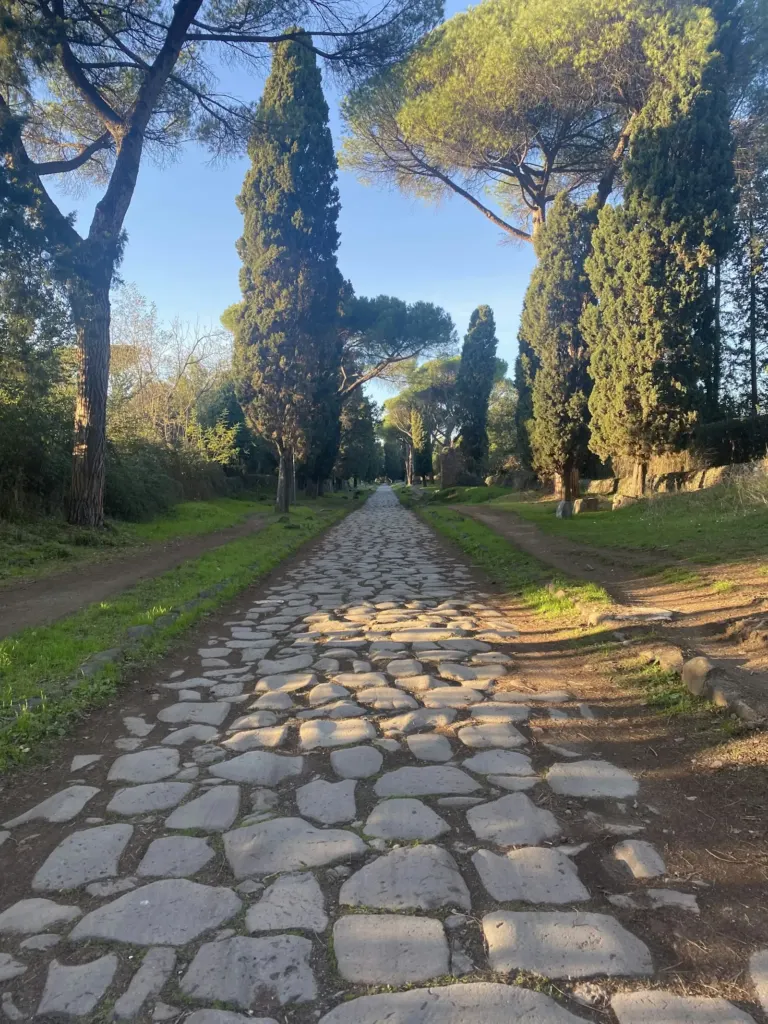
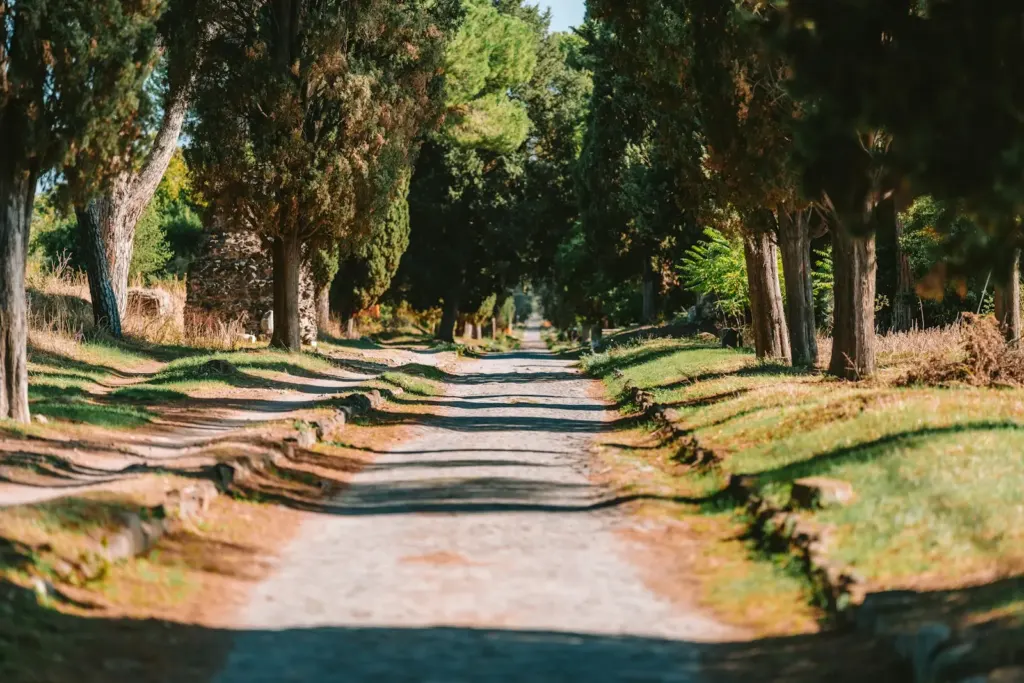
The Appian Way, or Via Appia Antica, is one of the oldest and most famous roads of ancient Rome. It starts at the city walls and runs south through the countryside past tombs, villas and underground catacombs. Parts of the original basalt paving survive, and the route is now protected within the Appia Antica Regional Park. Yes, the catacombs are on the Appian Way: several of Rome’s best-known ones lie along it, and they can only be visited with a guide.
For bookable options, see our Rome catacombs tours page; this is the place overview and logistics guide.
The road was begun in 312 BC under the censor Appius Claudius Caecus, and originally led to Capua. It was later extended to Brindisi on the Adriatic, which made it the main route to Greece and the East. The Romans called it the regina viarum, the “queen of roads”. After the slave revolt led by Spartacus was crushed in 71 BC, thousands of captives are said to have been crucified along it. Roman law banned burials inside the city, so roads such as this were lined with tombs, from simple markers to grand mausoleums.
In the Middle Ages the road lost importance, and tombs were stripped for stone or turned into fortresses. In the nineteenth century archaeologists and artists rediscovered it, and in the twentieth century, development was limited by protection of the area.
Yes. The Christian catacombs are networks of underground burial galleries dug into soft volcanic rock (tufa) from the second century AD onwards. They were not hiding places, as is often said; they were cemeteries. Several lie on or near the Appian Way:
Visits are guided only and the galleries are cool and narrow. Each catacomb closes one day a week and the day differs between sites, so check before you go. Our posts on which catacombs to visit and what to look for on the Appian Way go deeper. The catacombs underground tour is the guided option.
The most common public route is bus 118, which runs along the road from near the Colosseum and Circo Massimo, and is consistent with the transport details we list for the site. Check the current route and frequency before you go. A taxi is quick, and the park visitor centre is the place for maps. Some guided tours include transport, which removes the logistics.
Yes, and it is a popular choice. Bikes and e-bikes can be rented near the park information point, and the road is largely traffic-restricted on Sundays and holidays, which makes it more pleasant for cyclists and walkers. The cobbles are rough, so a hybrid or e-bike is more comfortable than a thin-tyre road bike. Our Appian Way e-bike tour combines the route with a guide.
The walkable stretch from Porta San Sebastiano to the Tomb of Cecilia Metella is a few kilometres and takes an hour or more at a leisurely pace, longer with stops. Going further to the Villa dei Quintili adds distance. A half day is a sensible plan, and you will want a lift or bike if you also visit a catacomb.
The park is open, and traffic restrictions on Sundays make it popular. Some sites, such as certain catacombs, close on specific weekdays or on Sundays. Check each site individually.
Spring and autumn are most comfortable. Midday in summer is hot, with little shade on the road. Bring water and wear sturdy shoes. In the catacombs it is cool, so a light layer helps.
The Appian Way fits well into a day that also includes the Colosseum or the Baths of Caracalla. See the Colosseum guide and day trips from Rome.
The stretch from Porta San Sebastiano to the Tomb of Cecilia Metella takes about an hour or more, and a half day with stops and a catacomb visit. Wear sturdy shoes for the uneven cobbles.
Bus 118 runs along the road from near the Colosseum area, and taxis are fast. Check current routes, since transport changes. A guided tour with transport removes the logistics.
Yes. Bikes and e-bikes can be rented near the park information point. The road is largely traffic-restricted on Sundays and holidays, though the cobbles are rough.
Yes. San Callisto and San Sebastiano are on or beside the road, and Domitilla is nearby. They are visited with guides only and each closes one day a week, so check before you go.
The park is open and the road is popular on Sundays because traffic is restricted. Some individual sites, including certain catacombs, are closed on set days, so check each one.
Related tours, guides and places.
Unusual things to do in Rome mostly change how you travel or where you go: a scooter, an…
Every Roman catacomb visit is guided, so the choice is between a catacombs tour on its own and…
Eight of our listed Rome tours start at €50 or less, from a river cruise to the Vatican…
The top thing to do in Rome is ancient Rome (Colosseum, Forum, Palatine), followed by the Vatican and…