Which catacombs in Rome should you visit? If you only have time for one, choose San Callisto for its famous highlights, or Domitilla if you prefer a quieter visit with an underground church. San Sebastiano is the short, central stop on the Appian Way, and Priscilla is the one for early Christian frescoes. All four are guided-only, underground and cool all year round.
The catacombs are not one site but several separate burial networks beside the ancient roads outside the walls, each run by its own community or foundation. That is why opening days differ from one to the next.
How catacomb visits work
- Guided only: you enter in a group with a guide provided by the catacomb. You cannot wander alone.
- Underground: expect steps, narrow galleries and a constant cool temperature, so bring a light layer even in summer.
- Time: a visit is typically about 40 to 60 minutes underground, plus getting there.
- Respect: these are burial places. Dress modestly and keep your voice low.
- Photography: rules vary, and often no photos are permitted below ground, so ask at the entrance.
The four main catacombs at a glance
| Catacomb | Known for | Feel | Best for |
|---|---|---|---|
| San Callisto | Crypt of the Popes and the Crypt of St Cecilia; commonly cited as roughly 20 km of galleries | Busiest, best organised | First visit, highlights |
| Domitilla | Underground basilica of Saints Nereus and Achilleus | Quieter, atmospheric | Avoiding crowds, architecture |
| San Sebastiano | Early Christian burial areas and the Roman-era graffiti linked to the cult of Peter and Paul | Short, easy | A quick stop on the Appian Way |
| Priscilla | Frescoes, including one of the earliest images of the Madonna and Child | Smaller, less visited | Art and early Christian imagery |
Are the catacombs of San Callisto worth it?
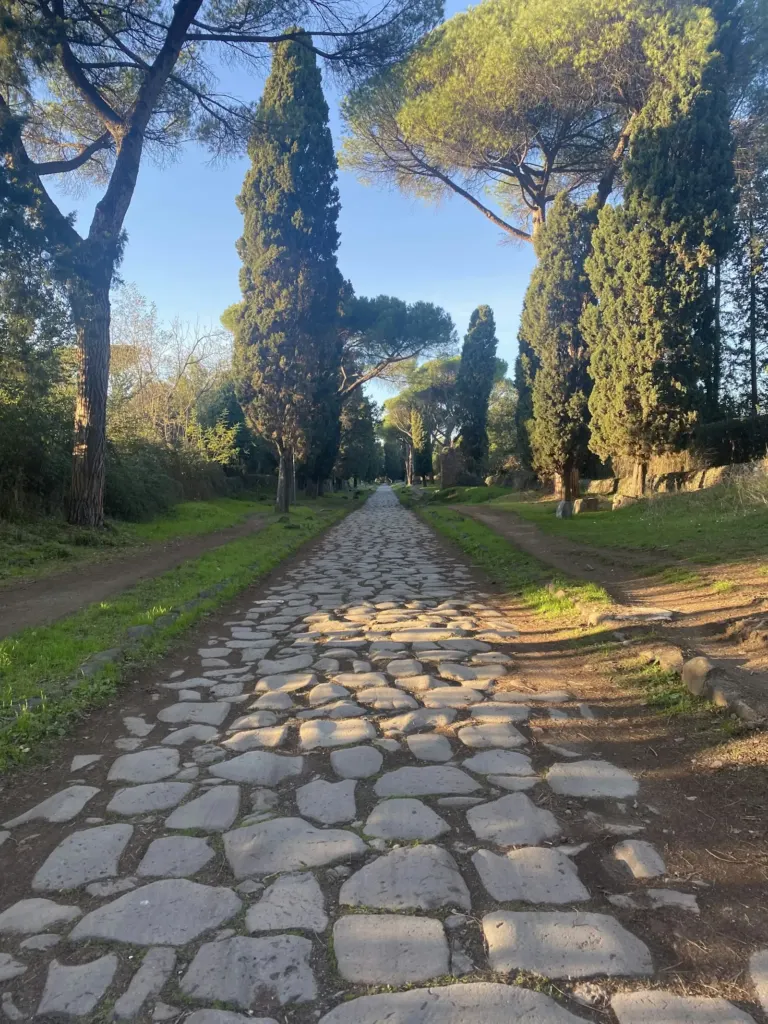
Yes, if you want the classic experience. San Callisto was the official cemetery of the Church of Rome in the third century, and it holds the Crypt of the Popes, where several early bishops of Rome were buried. It is the most visited catacomb, so expect larger groups and book ahead in busy months. The site is on the Appian Way side of the city, so it combines easily with a day exploring the road; see the Appian Way and catacombs destination guide and what to look for on the Appian Way.
Which catacombs have the underground church?
Domitilla. Its underground basilica, built over the graves of the martyrs Nereus and Achilleus, is a rare chance to see a full church-sized space cut below ground. Domitilla tends to be less crowded than San Callisto, which makes it a good choice if you dislike tight groups.
San Sebastiano: short and central
San Sebastiano sits beside the Basilica of San Sebastiano fuori le Mura on the Appian Way. The visit is shorter, and it is known for its early Christian mausolea and the ancient graffiti connected to the veneration of Peter and Paul. If you are cycling or walking the Appian Way, it is the easiest stop to add; our Appian Way e-bike tour covers the road itself.
Priscilla: for frescoes
The Catacombs of Priscilla lie north of the centre on the Via Salaria, away from the Appian Way. They are known for painted chambers, including the Greek Chapel and an early depiction of the Madonna and Child, often dated to around the third century. It is the pick for art and early Christian imagery rather than scale.
Can you visit the catacombs without a tour?
You can arrange your own visit directly with the catacomb, but it will still be a guided group on site. A transport-inclusive guided tour such as our Catacombs of Rome underground tour handles the travel for you, and our Rome catacombs tour guide compares the options.
What days are the catacombs closed?
This is the part that changes. Each catacomb sets its own weekly closing day and a winter break, and published sources disagree for some of them. As a rule, none are open every day, and some close for several weeks in winter or around August. Do not assume that the same closing day applies across sites. Check the official page of the catacomb you choose before you travel.
What the catacombs are, and what they are not
The Roman catacombs are underground cemeteries dug into soft volcanic rock (tufa) between roughly the second and fifth centuries, mostly by early Christian communities, although Jewish and pagan catacombs also exist. They were burial places, not hiding places or places of worship in daily use, which is a common misunderstanding. Visitors see carved niches for burials, small chapels, painted ceilings and inscriptions. Most skeletal remains were removed centuries ago, so do not expect rooms of bones; the Capuchin Crypt near Piazza Barberini is a different attraction altogether.
Getting there
San Callisto, Domitilla and San Sebastiano lie within a short distance of each other on or near the Appian Way, south of the centre. They are reachable by city bus and a short walk, and some visitors combine two in a day, though one is usually enough. Priscilla is on the Via Salaria to the north. Because the Appian Way has uneven stone and little shade in summer, a pre-booked tour or a bike ride can be easier than a long walk. Compare the options on our catacombs tours page.
How to choose
- Want the best-known visit: San Callisto.
- Want quiet and an underground church: Domitilla.
- Combining with a bike or walk on the Appian Way: San Sebastiano, or San Callisto nearby.
- Interested in painting: Priscilla.
- Short on time: pick one. Seeing two in one day adds little.
Check current details
Closing days, winter breaks, prices and visit times are set by each catacomb. Check each official page before travelling.