Small group
From€59Book now

Ostia Antica was ancient Rome's port, and its ruins are a calmer, shadier alternative to Pompeii. Reach it from Rome in about 30 to 40 minutes on the city train and allow three to four hours on site.
Ostia Antica is the ruined port city of ancient Rome, about 25 km from the centre, and it is easy to visit as a half-day trip: take Metro Line B to Piramide, change to the Roma-Lido train at Porta San Paolo, and ride roughly 30 minutes to Ostia Antica station. The excavated streets, apartment blocks, baths, shops and mosaics are less famous than Pompeii but extremely well preserved, and the park is spacious, shady and rarely crowded.
Ostia was founded, according to tradition, in the 4th century BC at the mouth of the Tiber and became Rome’s main commercial port. Grain, oil, wine and marble arrived by sea and were moved upriver to the capital. By the 2nd century AD it was a bustling city with tens of thousands of residents, many living in multi-storey apartment blocks (insulae) that look surprisingly modern.
Unlike Pompeii, Ostia was not buried by a volcano. It declined slowly as the Tiber silted up, the harbour moved to nearby Portus, and malaria and the end of imperial trade drained the city. The abandoned buildings were gradually covered by river sand and later stripped for building material, which preserved lower walls and floors, and many mosaics.
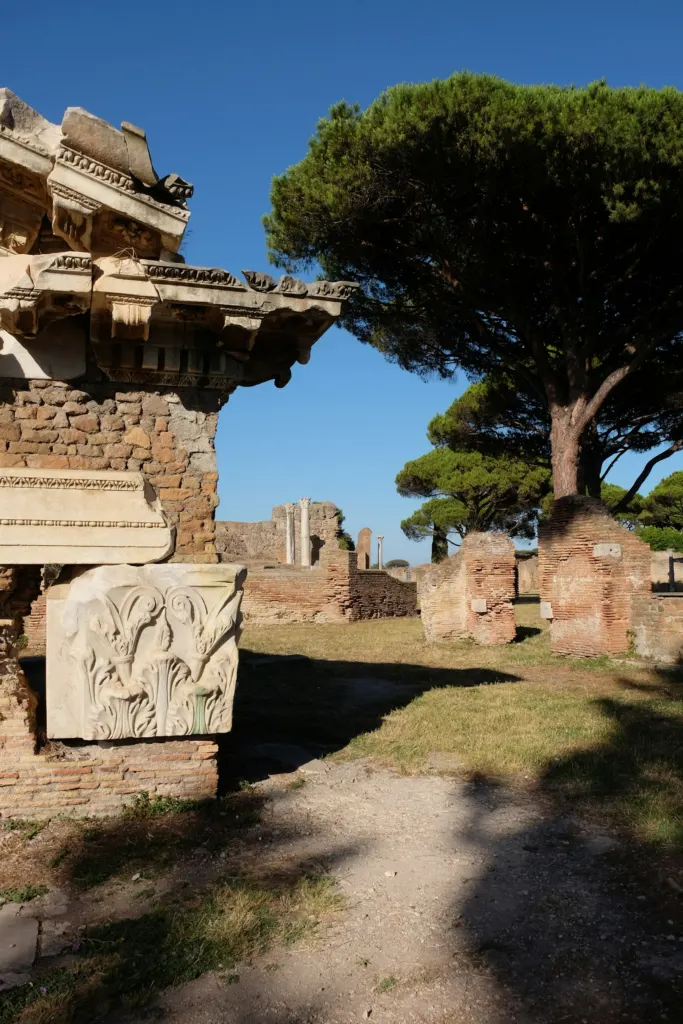
Look in the cool, tree-shaded corners too: umbrella pines, wildflowers in spring and the occasional stork’s nest make this park feel very different from the Roman Forum.
| Option | How it works | Typical time |
|---|---|---|
| Metro B + Roma-Lido train | Metro B to Piramide, walk through to Porta San Paolo and board the Roma-Lido line to Ostia Antica; it uses the standard Rome public transport ticket system | About 30 to 40 minutes, with trains running frequently through the day |
| Taxi or private driver | Door to door; traffic on the Via del Mare can be slow | About 40 to 60 minutes |
| Guided visit | Meet at the site entrance for a guided visit; the train is not included | Train time plus 2 to 4 hours on site |
From Ostia Antica station, the entrance is a short walk, signposted across a pedestrian bridge over the main road. Make sure your public transport ticket covers the trip, and validate it where required. Fares and timetable change, so check the ATAC and Roma-Lido service information on the day. If you want a refresher on the system, see our guide to getting around Rome.
For anyone who likes ancient history and open-air walking, yes. It is closer, cheaper to reach and more relaxed than Pompeii, and you see a different side of Roman life: commerce, apartment living and port business rather than villas and a volcano disaster. If this is your first ancient site, the Colosseum and Forum come first. If you are not keen on a lot of walking in the sun, or you want dramatic preserved frescoes, Pompeii or the Roman Forum may suit you better. For a direct comparison, read Ostia Antica vs Pompeii.
Allow three to four hours on site, plus the train. A shorter two-hour visit covers the Decumanus, Theatre, Square of the Guilds and Baths of Neptune. If you want to see most of the site and the museum, plan for half a day. A guide helps because signage is limited and the site is large; our Ostia Antica guided visit (from EUR 59, 4 hours, headsets and entry included, train not included) is built for this.
Yes, but with care. The modern seaside town of Ostia Lido is a further train ride or bus away from the ruins, and the beaches there are largely private beach clubs with entrance fees in season. A common plan is to do the ruins in the morning, eat lunch near the site, then continue to the sea in warm months. In summer it will be busy, and the heat is stronger, so start early. In winter, treat the beach as a short walk rather than a swim.
Check current details: opening hours, ticket prices, Roma Pass and free-entry days are set by the park and the Ministry of Culture and change. Check the official park website before you go, and see whether the Roma Pass is worth it if you are weighing a pass.
Spring and autumn are best: mild temperatures, green grass in spring and softer light. July and August are hot and exposed, so go as the gates open. Weekday mornings are quietest. Our summer heat guide has more advice.
If you enjoy the idea of a calm ancient site outside Rome, also consider Tivoli, or compare options in our Rome day trips guide. For tours that include transport, browse day trips from Rome.
Take Metro Line B to Piramide, follow signs to Porta San Paolo and board the Roma-Lido train towards Ostia. Get off at Ostia Antica, a ride of around 30 minutes. Standard Rome public transport tickets are used; check ATAC for current fares.
Yes, especially if you enjoy ruins with space to wander and fewer crowds. You see warehouses, apartments, baths, shops and mosaics of a working Roman port. It is a good complement to the Roman Forum or Pompeii.
Plan three to four hours on site for most of the main sights, plus the journey. You can see the highlights in about two hours, while a thorough visit including the museum can fill half a day.
Neither is better outright. Pompeii has more dramatic preservation and frescoes but requires a long trip from Rome. Ostia Antica is closer and calmer, and shows port and apartment life. Choose Ostia for a half day, Pompeii for a full day.
Yes, in warm months. The seaside district of Ostia Lido is a further short ride from the ruins. Many beaches are private clubs with entry fees, so decide in advance, and start early in summer to avoid the midday heat.
The park is normally closed on Mondays, apart from occasional holiday openings. Check the official park website for current opening days and last entry before you travel.
Related tours, guides and places.
Four days gives Rome room to breathe: ancient Rome, the Vatican, the Borghese Gallery with the baroque centre,…
The easiest day trips from Rome are Ostia Antica, Tivoli, Orvieto and Florence, all doable by train. Pompeii…
Pompeii is bigger and far better preserved but needs a long day. Ostia Antica is a short train…
At some Rome sites a guide changes the visit completely; at others you lose little by going alone….
Three full days covers the big sights comfortably, and four is the sweet spot if you want a…
Rome in summer is hot and bright, but very doable if you sightsee early, rest at midday and…