Sunset
From€29Book now

Castel Sant'Angelo began as Emperor Hadrian's tomb and became a papal fortress, prison and museum. Its rooftop terrace is one of the best viewpoints in Rome, and a visit takes about two hours.
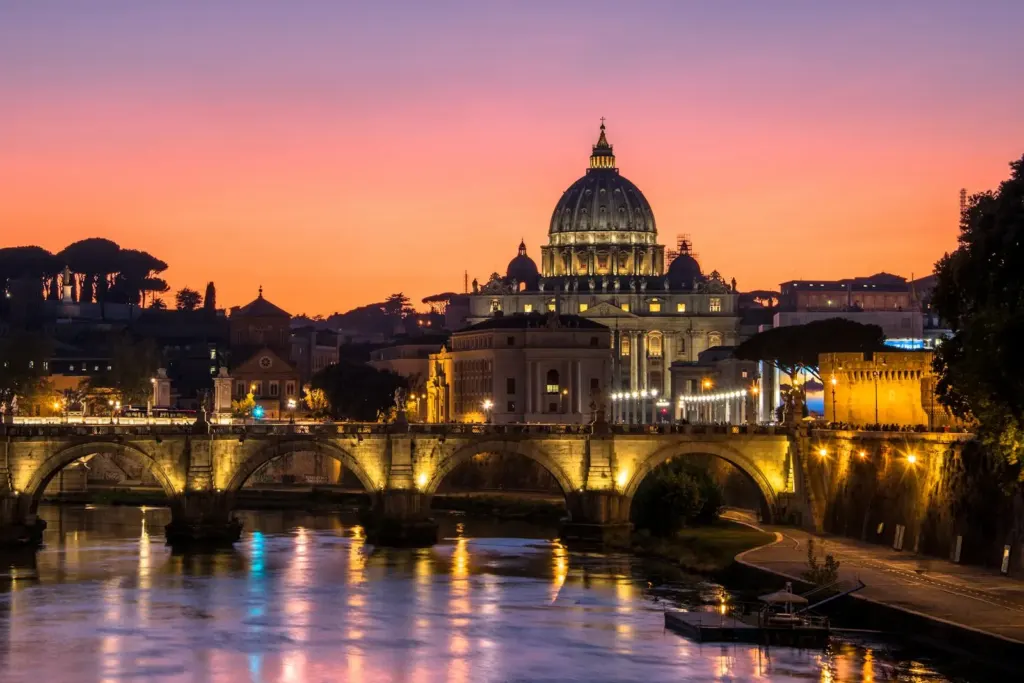
Castel Sant’Angelo is the round fortress on the Tiber, beside St Peter’s, that began around AD 135 as Emperor Hadrian’s mausoleum and later became a papal refuge, a prison and today a national museum. It is worth visiting for the layered history, the papal apartments and above all the rooftop terrace, which looks across the river to the dome of St Peter’s and over the rooftops of the historic centre. Most visitors need about two hours.
Hadrian began a monumental tomb on the right bank of the Tiber in the 130s AD, finished after his death under his successor Antoninus Pius. It held the ashes of Hadrian and several later emperors and their families. A cylindrical drum on a square base, it was originally faced with marble and topped with trees and a statue, and linked to the city by the Pons Aelius, now the Ponte Sant’Angelo.
In the 3rd century the tomb was folded into the Aurelian Walls as a defensive position. By the Middle Ages it was a fortress controlling the bridge and approach to the Vatican. The name comes from a legend that, during a plague in AD 590, Pope Gregory the Great saw an angel sheathing a sword above the building, a sign the epidemic would end. The bronze angel on top today dates from the 18th century.
The popes used the castle as a stronghold when Rome was unsafe. In 1277 a raised, walled corridor, the Passetto di Borgo, was linked to the Vatican, allowing a pope to escape to the castle in minutes. Pope Clement VII used it to flee the Sack of Rome in 1527. Later the castle served as a state prison, and it appears in Puccini’s opera Tosca, whose final act is set on the ramparts.
Inside, the Renaissance popes added richly decorated apartments, including a hall frescoed in the 16th century, alongside armouries, cells and a collection of paintings and weapons.
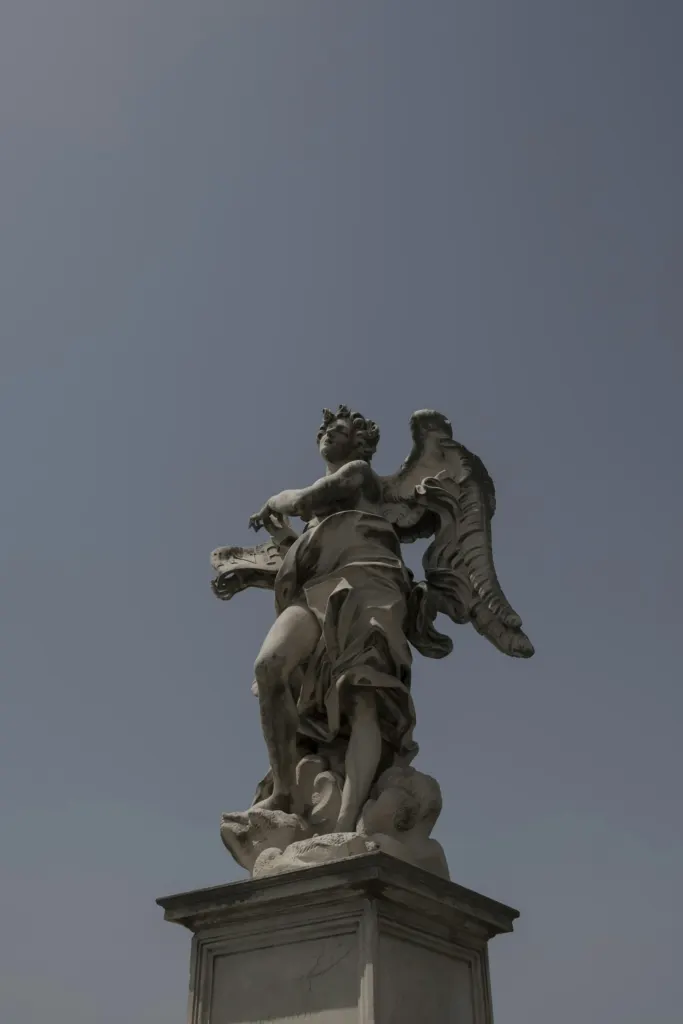
Outside, the Ponte Sant’Angelo is a pedestrian bridge lined with ten statues of angels carrying symbols of Christ’s Passion, designed under Bernini’s supervision. It is lovely at dusk when the castle is lit.
Yes, if you like layered history and good views, and especially if you want a viewpoint that is calmer than many in Rome. It rarely draws the queues of the Vatican Museums or Colosseum, though the line can build on busy days and when the weather is good. If you are short on time and have to choose between museums, the Vatican or Borghese Gallery will usually take priority, but this works well as a lighter second stop on the same side of the river.
Yes. The ticket includes access to the terrace, which is reached by climbing ramps and stairs, so allow some effort and expect uneven surfaces. The best light is late afternoon, when the view toward St Peter’s is lit and the heat has eased. The castle also holds occasional evening openings in summer, which the museum announces separately.
Sort of. The Passetto di Borgo is a real fortified corridor about 800 metres long linking the Apostolic Palace area to the castle. It is not part of the normal museum route, and access has been limited to special guided openings, so check the museum’s announcements rather than relying on a general ticket.
| Question | Answer |
|---|---|
| How long? | About 1.5 to 2 hours |
| Typical opening | Tuesday to Sunday, roughly 9:00 to 19:30, last entry about an hour before closing; normally closed Monday (the Ministry of Culture lists occasional Monday openings) |
| Ticketing | Timed or standard entry; buy online to avoid the line on busy days |
| Best time | Late afternoon for the terrace, or first thing in the morning for quiet |
| Accessibility | Ramps and many steps; limited step-free routes |
Check current details: hours, closing days, evening openings and ticket prices are set by the museum and the Ministry of Culture and change through the year. Confirm on the official museum page or the Ministry of Culture site before you go. For ticket options see our Castel Sant’Angelo tickets page, or our skip-the-line terrace entry (from EUR 39).
First Sundays of the month usually bring free entry to state museums, which also means bigger crowds: see our guide to free Sundays in Rome.
Castel Sant’Angelo sits on the same side of the river as Vatican City, so many visitors do the Vatican in the morning and the castle in the afternoon; our Vatican Museums tours hub covers the Vatican options. Cross the bridge to walk to Piazza Navona and the Pantheon for an easy evening. Browse the full tours list for bookable options.
Yes. It combines Roman, medieval and Renaissance history with a rooftop terrace that has some of Rome's best views, and it is usually less crowded than the Colosseum or Vatican. Allow about two hours.
Emperor Hadrian began it in the 130s AD as a mausoleum for himself and his family. It was completed under his successor Antoninus Pius and later turned into a fortress by the popes.
Most visitors need about 90 minutes to two hours to climb the ramps, see the papal apartments and armouries, and spend time on the terrace. Add time if you want to photograph from the bridge.
Yes, the standard museum ticket includes the terrace beneath the bronze angel. The route involves ramps and stairs, so expect some climbing, and choose late afternoon for the best light.
Yes, the Passetto di Borgo is a real fortified corridor linking the Vatican area to the castle, used by Pope Clement VII in 1527. It is not on the regular visitor route and is opened only on special occasions.
It is normally closed on Mondays, though the Ministry of Culture sometimes lists special Monday openings. Confirm on the official site before planning your visit.
Related tours, guides and places.
Eight of our listed Rome tours start at €50 or less, from a river cruise to the Vatican…
A half-day tour in Rome runs up to about four hours, enough for one major site or one…
Rome in winter is mild by northern standards, damp at times and far less crowded outside the holiday…
Two days is enough for Rome's headline sights if you split them by area: ancient Rome and the…
Rome is easier on a budget than most capitals: many of its best sights are free. Spend on…
Rome at night is calmer and cooler, with lit fountains and piazzas, aperitivo in Trastevere and late dinners….