Small group
From€69Book now

Testaccio is Rome's old slaughterhouse district and its most food-minded neighbourhood: a covered market, traditional trattorias, a hill of broken pots and a quiet cemetery, all reached by one Metro stop.
Testaccio is a working-class Roman neighbourhood south of the Aventine Hill, best known for its food. It is where the city’s offal cooking was born, where one of Rome’s best-loved covered markets sits, and where you can eat carbonara, amatriciana and gricia in trattorias that have served locals for generations. Reach it in minutes from the centre on Metro Line B (Piramide) and plan to arrive hungry.
It is not a district of headline monuments, which is exactly its appeal. You come for lunch, a market stroll and a few oddities of ancient and modern Rome sitting side by side.
Testaccio grew up in the late 19th century as a planned working district. Its centrepiece was the Mattatoio, the city slaughterhouse, which operated here until the 1970s. Workers were once partly paid in the cuts nobody else wanted, and the cooking that developed around them is called the quinto quarto, the “fifth quarter”. Oxtail stew (coda alla vaccinara), tripe, and dishes built on offal are the neighbourhood’s calling card. You do not have to order them: the same kitchens turn out the classic pasta dishes of Rome too.
The old slaughterhouse buildings still stand and now house cultural spaces and exhibitions, a reminder of how recently this was an industrial quarter.
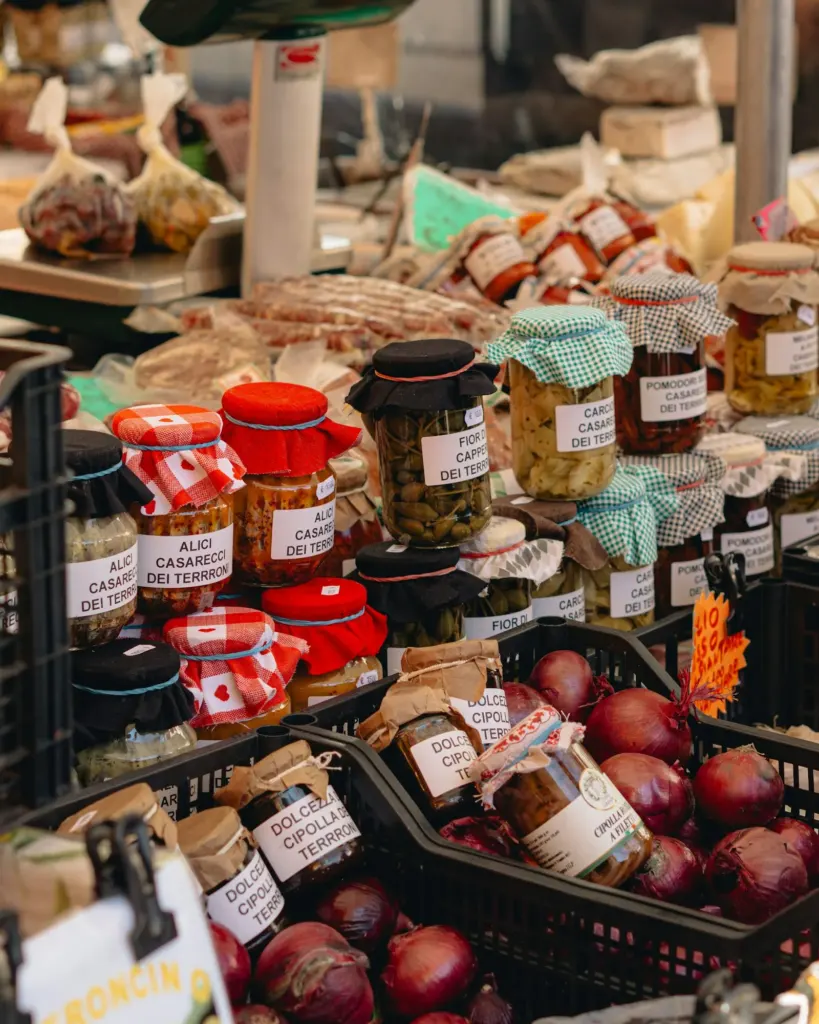
Yes, if you like food. The Mercato di Testaccio moved to its current covered home in 2012 and is a working market for neighbourhood shoppers, with fruit and vegetable stalls, butchers, fishmongers and a row of counters selling sandwiches, fried snacks and ready-to-eat Roman dishes. Go in the morning to see it at its busiest; markets in Rome generally wind down by mid-afternoon and are closed on Sundays, so check the market’s own information before planning around it.
Use it as a tasting stop rather than a sit-down meal: pick up a sandwich, try a few local specialities, then decide which trattoria is next. If you would rather have this done with context, our Testaccio market and Roman specialities tasting (from EUR 69) is a small-group walk with a guide, and you can compare similar options in our best food tours in Rome list.
For a wider picture of how Romans eat, see a beginner’s guide to eating like a Roman and our food lover’s Rome guide.
This is a hill about 35 metres high made almost entirely of broken amphorae, the clay jars that carried olive oil to ancient Rome. The pottery was dumped here deliberately and stacked in layers over roughly three centuries. Access to the mound itself is limited and depends on organised visits, so treat it as something to see from the street unless you have booked entry. Today many of the arches at its foot hold bars and clubs.
The Protestant, or Non-Catholic, Cemetery is one of the quietest places in Rome, and the resting place of the poets John Keats and Percy Shelley among many others. Beside it, the Pyramid of Cestius is a steep marble tomb built for a Roman magistrate in the 1st century BC and later absorbed into the city walls. Cemetery hours and the donation requested change, so check before you go.
Testaccio is an easy walk from the Aventine Hill, the Circus Maximus and the Baths of Caracalla, and a short trip to Ostiense. The Ostia Antica train also leaves from Porta San Paolo next to Piramide station, so you can combine the two: see our Ostia Antica guide. Across the river, Trastevere is a pleasant walk or short tram ride away.
Our getting around Rome guide explains tickets and passes.
Late morning to early afternoon works best: the market is open, trattorias serve lunch and the streets are lively. Allow two to three hours for the market and a relaxed meal, or half a day if you add the cemetery and Monte Testaccio. Many family-run restaurants close for part of August, and the best-known places fill up at weekends, so reserve ahead. Evening is a different mood, with bars and live music around the old arches.
It suits travellers who prefer a residential feel and good eating over being steps from the Colosseum. You have a Metro station for fast links to the centre, plenty of restaurants and fewer tourist crowds, but fewer hotels than central districts. For a comparison of areas, read where to stay in Rome.
Looking for something bookable? Browse all our Rome tours.
Testaccio is known for traditional Roman cooking, especially the offal-based quinto quarto dishes born around the old slaughterhouse, plus a popular covered market, Monte Testaccio (a hill of ancient amphora fragments) and the Non-Catholic Cemetery.
Yes, if you enjoy food. It is a working neighbourhood market with produce stalls and counters selling sandwiches and Roman snacks. Go in the morning, avoid Sundays when markets are generally closed, and check the market's own information for hours.
Try the classic Roman pastas (carbonara, amatriciana, gricia, cacio e pepe), oxtail stew, tripe alla romana and supplì. Pizza al taglio from a bakery is a cheap, quick option, and a market tasting is a good way to sample several things.
It suits visitors who want a local, food-focused base with Metro Line B nearby. It has fewer hotels and is less central than the historic centre, so decide whether atmosphere or walking distance to the main sights matters more.
Take Metro Line B to Piramide station and walk five to ten minutes. Trams 3 and 8 also serve the area, and it is walkable from the Aventine Hill, the Circus Maximus and, over the river, from Trastevere.
Allow two to three hours for the market and lunch, or about half a day if you add the cemetery, the Pyramid and a look at Monte Testaccio.
Related tours, guides and places.
Rome in winter is mild by northern standards, damp at times and far less crowded outside the holiday…
The best food tour in Rome is the one in the neighbourhood that matches your appetite: Trastevere for…
A cooking class in Rome is a hands-on evening or morning where you make pasta and dessert, then…
Four days gives Rome room to breathe: ancient Rome, the Vatican, the Borghese Gallery with the baroque centre,…
Rome is easier on a budget than most capitals: many of its best sights are free. Spend on…
The best food in Rome is in the neighbourhoods, not on the monument squares. Head for Testaccio, Trastevere,…