On the Appian Way (Via Appia Antica), look for stretches of original basalt paving with wheel ruts, the tombs lining the road, the round Tomb of Cecilia Metella, the Circus of Maxentius, the entrances to the catacombs and, further out, the arches of Roman aqueducts. You can walk it, cycle it or ride it on an e-bike, and it is worth it if you like quiet, open-air ancient Rome.
This is the on-the-road checklist. For background on the route and its place in Rome’s history, see the Appian Way and catacombs destination page; this article tells you what to notice as you go.
What is on the Appian Way?
The road runs south-east out of Rome and is lined by a mix of monuments, parkland and private property. The best-known stretch is the first few kilometres beyond the city walls, in the Appia Antica Regional Park. Here is the checklist, in the order you will usually meet it.
1. The road itself
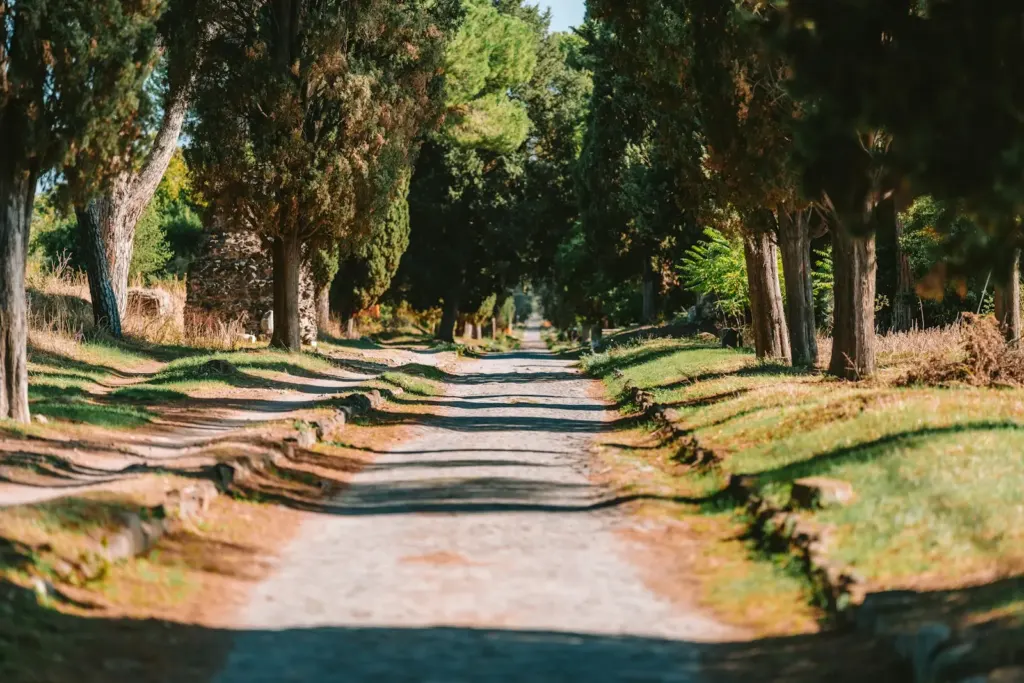
Look down. Where the original surface survives you will see large, irregular blocks of dark volcanic basalt fitted tightly together, with ruts worn by cart wheels. Roman builders raised the centre slightly so that rain ran off to the sides. The stones are rough, so walking and cycling on them is slower than it looks.
2. Tombs along the roadside
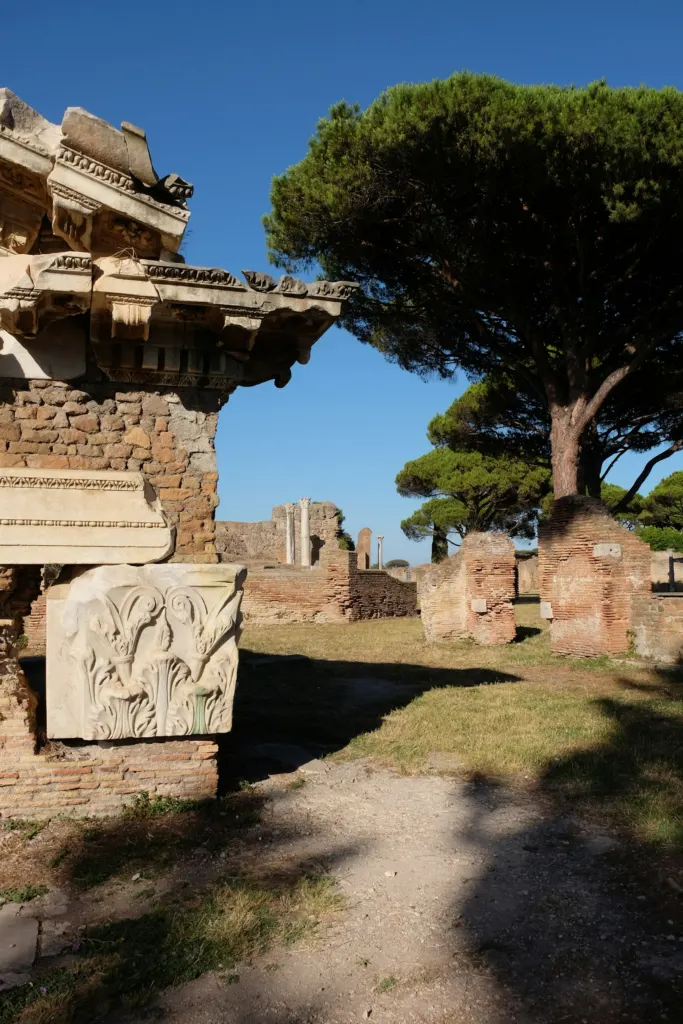
Roman law kept burials outside the city walls, so families built tombs along the main roads. The Appian Way is lined with them. Many have lost their marble facing, but you can still see brick cores, niches for statues and inscriptions. The most recognisable is the Tomb of Cecilia Metella, a large round monument with medieval battlements added later.
3. The Circus of Maxentius
Near the Tomb of Cecilia Metella, the Circus of Maxentius is one of the best-preserved Roman circuses. Look for the starting gates and the central spine (the barrier around which chariots raced). It was a chariot-racing track built in the early 4th century. Visiting hours and entry rules are set by the site operator, so check before you go.
4. Catacombs below ground
Under the fields are galleries where early Christian and Jewish communities buried their dead. Several are open on guided visits, and their opening days vary, so check ahead. They are guided-only and cool inside, so they make a good break from the sun. See which catacombs in Rome to visit and the Rome catacombs tour hub. The Catacombs of Rome underground tour is one listed option.
5. Aqueduct arches and countryside
Further out, the arches of Roman aqueducts stride across the grass. They are among the most photogenic sights in the park. Umbrella pines, cypress trees and open fields shape the horizon, and the landscape has a rural feel that is rare so close to the city centre.
How long does it take to walk the Appian Way?
The ancient road is long, but most visitors cover a few kilometres of the best-known stretch. A walk from the park visitor area to the Tomb of Cecilia Metella and the Circus of Maxentius, with stops and a catacomb visit, fills a half-day. If you are short of time, pick three things: a stretch of original paving, one or two tombs and the pine-lined view down the road.
Can you cycle the Appian Way?
Yes. Bikes can be rented near the regional park, and an e-bike makes the cobbled surface easier. A guided option is the Appian Way e-bike tour, which removes the route-finding. The paving is bumpy, so use wider tyres if you have a choice, and take care with traffic on the narrower sections.
Is the Appian Way open on Sundays?
On Sundays and holidays, the main road is largely closed to motor traffic, which makes it popular for walking and cycling. Individual sites, such as catacombs and some monuments, may have different opening days, so check each one in advance rather than assuming. On other days, watch for cars on the narrow road and stay on the path or sidewalk.
Getting there and what to bring
A city bus serves the road, and the starting point from the centre involves a short ride. See getting around Rome for how buses and the metro fit together. Bring water, sun protection and sturdy shoes, as there is little shade. Pack a snack, since services are limited between sights.
Where does the Appian Way start?
The road begins at the ancient city walls, near the Baths of Caracalla and Circus Maximus side of the centre, and leads south-east. The historic stretch beyond the walls is the one most visitors walk or cycle. Check a map before you set off, because the first part passes through busy streets before the road opens into parkland.
Respecting the site
The Appian Way is a living landscape with private land on both sides. Stay on marked paths, do not climb on ancient walls, take litter with you and leave stones where they are. Some stretches are fenced for good reason.
Best season and combinations
Spring and autumn give the best light and temperatures. Winter is quiet and often clear. Summer afternoons are hot and shade is scarce; see Rome in summer. You can combine the road with a catacomb visit, and then head to dinner in Testaccio or Trastevere. If you are still deciding whether it is worth the trip, read things to do in Rome and the Appian Way and catacombs by e-bike listing.
A short field list to tick off
- A stretch of original basalt paving with wheel ruts.
- Two or three tombs with visible brick cores, niches or inscriptions.
- The round Tomb of Cecilia Metella and its battlements.
- The starting gates and spine at the Circus of Maxentius.
- A catacomb entrance (visits are guided only).
- The aqueduct arches against the sky.
- The pine and cypress skyline along the road.