Pompeii is the bigger and better-preserved site, but it costs you most of a day. Ostia Antica is much closer to Rome, usually reached in well under an hour by local train, and is quieter, so it fits comfortably into a half day. If you have one full day to spare and want the famous “frozen in time” experience, choose Pompeii. If you have a morning or an afternoon, or you travel with young children, Ostia Antica is the better choice.
Ostia Antica vs Pompeii at a glance
| Ostia Antica | Pompeii | |
|---|---|---|
| What it was | Rome’s ancient port city at the mouth of the Tiber | A Roman town buried by the eruption of Vesuvius in AD 79 |
| From Rome | Local train, well under an hour | About 2.5 to 3 hours each way by high-speed train to Naples plus Circumvesuviana, or an organised transfer |
| Time on site | 2 to 4 hours | 3 to 5 hours, more if you want to see it properly |
| Size | Large and spread out | Larger, with more intact houses and streets |
| Crowds | Usually much calmer | Often busy, especially in peak season |
| Day length | Half day | Full day, often 12 hours on a tour |
| Best for | Quiet exploring, families, a short trip | Spectacle, frescoes, famous street scenes |
How far is Ostia Antica from Rome?
Ostia Antica lies in the Rome municipality, near the coast, and is reached on the Roma-Lido commuter line from the Porta San Paolo (Piramide) area. It is a straightforward local trip, and the journey is normally covered by the standard Rome public transport fare; verify the current fare and timetable with ATAC before travelling. See our Ostia Antica destination guide for how to get there and what to see.
How far is Pompeii?
Pompeii is in Campania, beyond Naples. The usual route is a high-speed train from Rome to Naples, then the Circumvesuviana line from Naples to the Pompei Scavi stop beside the entrance. Allow roughly 2.5 to 3 hours each way including connections. Organised day trips avoid the connections but run about 12 hours. Our Pompeii day trip from Rome is listed at 12 hours, with an early departure and transport included. For planning details read Pompeii day trip from Rome and the Pompeii guide.
Which is less crowded?
Ostia Antica is normally calmer. The site is large and has few headline attractions, so visitors spread out and you can often walk streets alone. Pompeii draws far larger crowds, particularly mid-morning and in summer, and the busiest streets can feel crowded. If peace matters, arrive early at either site.
What is each site like?
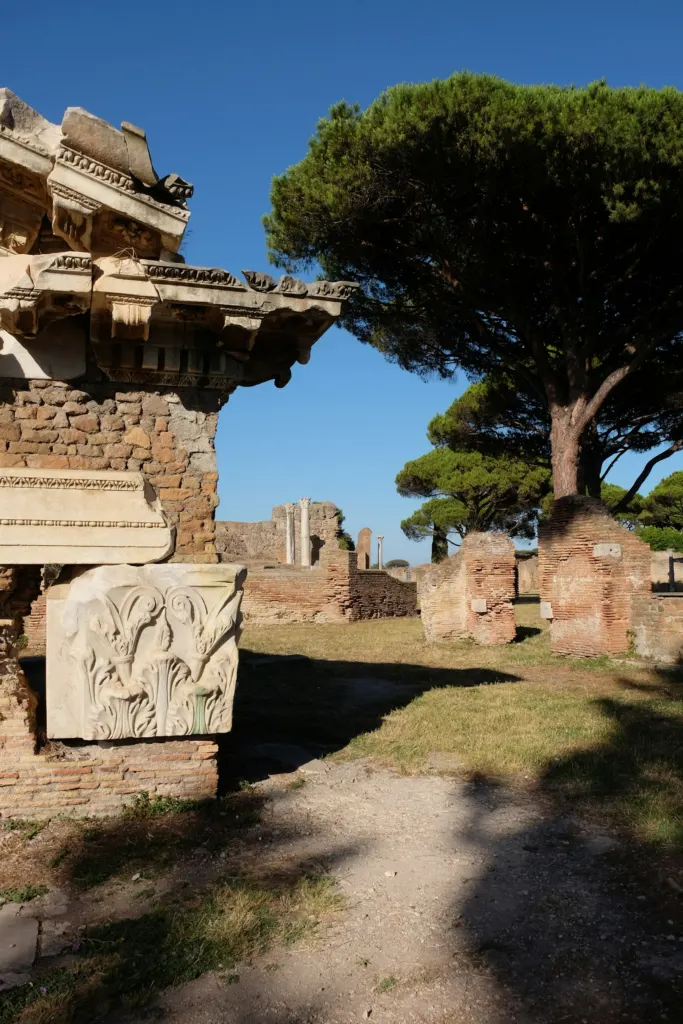
Ostia Antica. Walk the main street, see the baths with mosaics, the ancient theatre, shops and apartment blocks, and the small bar with a serving counter known as the thermopolium. Pine trees and open space give it a park-like feel. Our Ostia Antica guided visit lists the Baths of Neptune mosaics, the theatre and the thermopolium as highlights.
Pompeii. Expect paved streets with cart ruts, houses with wall paintings, public baths, a forum and the shadow of Vesuvius. The city is bigger and more complete, which is why it takes longer.
Which is cheaper?
Ostia Antica is almost always cheaper overall because you avoid long-distance rail and a full day of costs. Entry prices at both sites are set by the official parks and change, so check the official sites (the Ostia Antica archaeological park and pompeiisites.org) for current fees. For our listings, the Ostia Antica guided visit is from EUR 59 (entry ticket and guide included, train not included) and the Pompeii day trip from EUR 119 (site entry, guide and return transport included).
Can you combine Ostia Antica with the beach?
Yes. The same rail corridor continues to the seaside area of Ostia, so many visitors pair the ruins with a swim or a seafood lunch in warm months. Allow time for the extra transfer, and check how crowded the beaches are on summer weekends. Closing days apply to the ruins: the park is closed on Mondays, according to the official site, so plan around that.
Verdict: which should you choose?
- Half a day only: Ostia Antica.
- A full free day and you want the iconic site: Pompeii.
- Travelling with young children or in summer heat: Ostia Antica, with shade and a shorter day.
- Interested in Roman daily life, trade and port life: Ostia Antica.
- Interested in the eruption, frescoes and intact houses: Pompeii.
If you are also weighing the coast, compare Pompeii vs the Amalfi Coast, and for more options browse day trips from Rome.
Check current details. Opening hours, closing days and ticket prices change by season. Confirm them on the official Ostia Antica and Pompeii sites before you go.
Practical tips for either site
- Go early. Both sites are mostly open-air with limited shade. Morning gives cooler temperatures and fewer people.
- Wear proper shoes. Ancient paving is uneven, and you will walk several kilometres.
- Bring water and a hat. Check onsite refreshment options, which are limited at Ostia Antica.
- Allow time to explore. Neither site rewards a rushed visit; choose a few areas and enjoy them.
- Consider a guide. Ruins make more sense with explanation. See the Ostia Antica guided visit or the Pompeii day trip.