Skip the line
Skip-the-line tickets
Vatican Museums & Sistine Chapel Skip-the-Line Ticket
3 hoursEasyAudio guide
Free cancellation
From€49Book now

Vatican City is an independent state inside Rome, home to St Peter's Basilica and Square and the Vatican Museums with the Sistine Chapel. Here is what each part offers and how to plan the visit.
Vatican City is a country: the world’s smallest independent state, covering about half a square kilometre inside the city of Rome. For visitors it means three main experiences: St Peter’s Square, St Peter’s Basilica and the Vatican Museums with the Sistine Chapel. St Peter’s Square and the Basilica are free to enter (with security checks), while the Museums are ticketed, and the two have separate entrances.
This is our overview of the whole place and how the sights fit together. For bookable options, see the Vatican Museums tours and tickets page.
Yes. The Vatican’s sovereignty comes from the Lateran Treaty, signed on 11 February 1929 between the Holy See and the Kingdom of Italy, which took effect on 7 June 1929. The state is the territory through which the Holy See, the government of the Catholic Church, operates, and the Pope is its head. Its population is under a thousand people. It has its own postal service, radio, a small railway station and the Pontifical Swiss Guard, who have been in service since 1506.
In practice, you enter from Italy without passport checks. A white line in St Peter’s Square marks the boundary, so you walk into another country as you cross into the Square.
The area west of the Tiber was once outside the ancient city, with a circus built by Caligula and Nero, where tradition places the martyrdom of St Peter. A shrine was built over what was believed to be his tomb, and Emperor Constantine began a large basilica on the site in the early fourth century. Over the following centuries the popes made the Vatican their main residence, and in the Renaissance it became a centre of art and building, as popes commissioned Michelangelo, Raphael and Bernini.
The present St Peter’s Basilica was begun in 1506 and consecrated in 1626. The Vatican Museums grew from the papal art collection, with antiquities collected by popes from the early sixteenth century, including the famous Laocoön sculpture, which was displayed in 1506.
The Square is a great elliptical space framed by Bernini’s colonnades, designed in the 1650s-60s to embrace visitors “like the arms of the Church”. At its centre stands an Egyptian obelisk brought to Rome by Caligula and moved here by Pope Sixtus V in 1586. Two fountains and a marked disc on the pavement help you find the best viewing points for the colonnades. The Square is open to the public at most times, although it can be restricted during major events. Tickets (free) are required for papal general audiences, which are normally held on Wednesday mornings, and for special ceremonies. Check the Holy See’s official channels for current details.
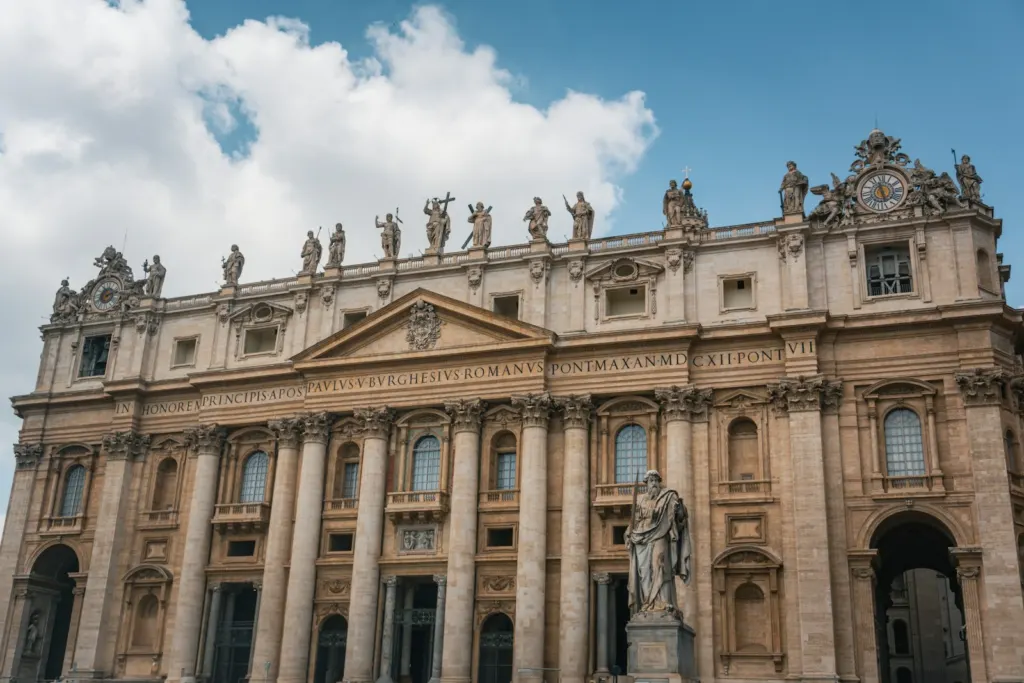
St Peter’s is among the largest churches in the world and is free to enter, though you pass through security first and a queue forms in the busiest hours. A strict dress code applies: shoulders and knees must be covered, for men and women. Our article on the Vatican dress code covers what to wear.
Highlights inside:
Visits to the excavations beneath the Basilica (the Scavi, or necropolis) are controlled and must be requested in advance with the Vatican’s excavations office. Do not assume you can add this on the day.
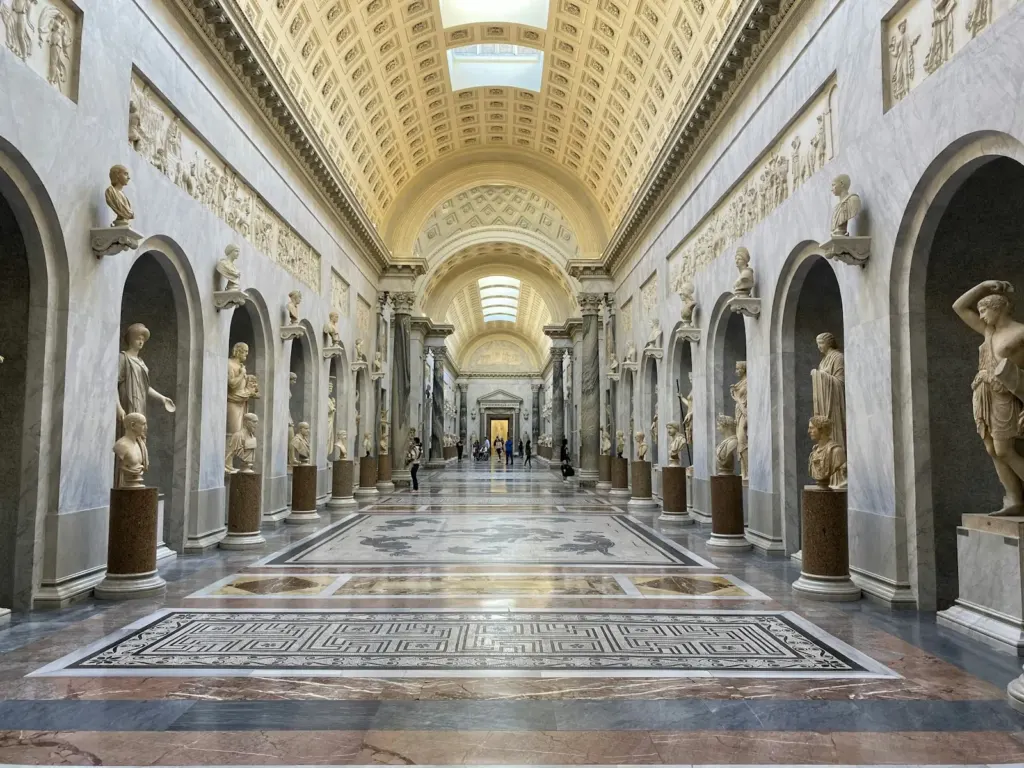
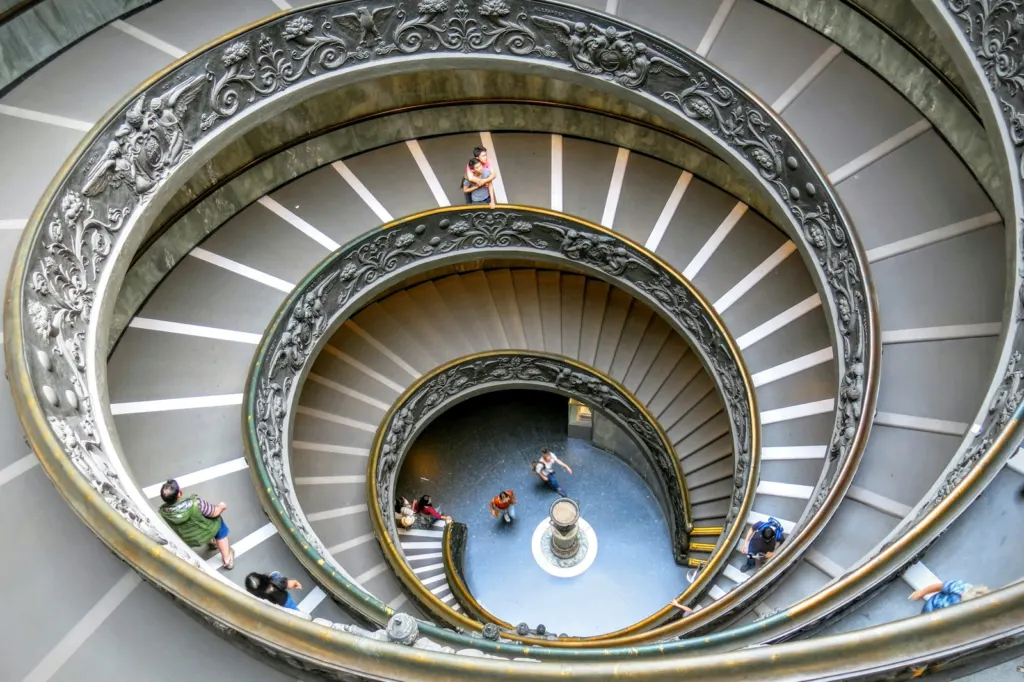
The Vatican Museums are a vast complex of galleries. The Sistine Chapel is part of the same visit and ticket, so you do not need a separate Sistine ticket. Expect a long, one-way route through the galleries that ends at the Chapel, with a shortcut direct to the Chapel offered in places. Key stops:
Museum opening days include closures on Sundays, apart from a free-entry day usually held on the last Sunday of the month which is extremely crowded, and on church holidays. Because hours and prices change, check the official site, museivaticani.va, before planning. For tickets and tour formats, compare the options in early access, skip-the-line or private, and use our step-by-step booking guide. For the current picks, see the early-access tour and the small-group Sistine Chapel highlights tour.
Allow half a day for the Museums and the Sistine Chapel (about three hours), and another hour or more for the Basilica, longer if you climb the dome. A full day is realistic if you do both without rushing. If you only have a few hours, the Museums with a guide, followed by a short visit to the Basilica, is a common order, because the Museums route can lead you out near the Basilica. Check the current rules on whether the Museums-to-Basilica shortcut is open.
For crowd timing tactics, see Vatican without the crowds.
Millions of people visit each year, and most want the same thing: the Sistine Chapel. The Museums route funnels everyone toward it, so the galleries before it can feel like a moving corridor. Early-access visits, small-group tours and late-afternoon entries all try to change when you reach the Chapel rather than whether other people are there. If crowds worry you, read about the three main ticket styles before you choose. Our skip-the-line ticket listing is the simplest independent option.
Metro Line A to Ottaviano or Cipro, then walk about ten minutes to the Museums entrance or to the Square. Many buses and trams also serve the area. From Castel Sant’Angelo you can walk along Via della Conciliazione straight to the Square, a route that gives the Basilica’s dome as a backdrop. Details of Rome’s transport are in our getting around guide.
| Plan | Order | Best for |
|---|---|---|
| Early start | Museums and Sistine Chapel first, then St Peter’s Basilica, then lunch in Prati | Most first-time visitors; art before the heat and crowds build |
| Basilica first | St Peter’s early, climb the dome, then the Museums in the afternoon | Visitors who prefer architecture and views, and who have a late museum slot |
| Short visit | St Peter’s Square and the Basilica only, plus a walk along Via della Conciliazione | Travellers with under three hours or those who want to avoid museum queues |
Whichever order you choose, do not schedule a second big sight straight after. The Museums route is long, and the Basilica queue and dome climb add more time than most people expect.
The Vatican suits anyone interested in art, architecture or religious history, and it is a strong rainy-day choice because most of it is indoors. It is less suited to small children on a tight schedule, because the Museums route is long and quiet behaviour is expected in the Sistine Chapel.
Castel Sant’Angelo is a short walk away; see our Castel Sant’Angelo guide. The Prati district has shops and restaurants for lunch away from the tourist menus. If you plan to combine the Vatican with other big sights, read Vatican and Colosseum in one day, and for a wider plan see Rome in three days.
Yes. It is the smallest independent state in the world, about half a square kilometre, established under the Lateran Treaty of 1929. It is entirely surrounded by Rome, and you can enter from Italy without passport control.
Yes, entry is free, but you go through security and may queue. A dress code applies. Climbing the dome and visiting the Treasury are separate, and the Museums are ticketed. Check the Basilica's official site for current fees.
Yes, usually. Part of the climb can be done by lift, and the rest is a narrow stair. There is a fee, and the climb can close for weather or events. Check the Basilica's official site for current access.
Plan on half a day for the Museums and Sistine Chapel and another one to two hours for the Basilica. A full day is comfortable if you also climb the dome or want a slow pace.
No. The Square is open to the public. Tickets, which are free, are required only for papal general audiences and certain ceremonies. The Vatican Museums and Sistine Chapel need a ticket.
Shoulders and knees must be covered for everyone. Staff at the entrance can refuse entry, so bring a scarf or light layer in summer. See our dress code article for details.
No. The Sistine Chapel is the last part of the Vatican Museums route and uses the same ticket. St Peter's Basilica is a separate, free-entry site.
Related tours, guides and places.
Early access is the best choice if crowds bother you, a skip-the-line ticket is the cheapest way in…
A half-day tour in Rome runs up to about four hours, enough for one major site or one…
Vatican Museums tickets are timed, the Sistine Chapel is included in the same ticket, and the choice is…
The top thing to do in Rome is ancient Rome (Colosseum, Forum, Palatine), followed by the Vatican and…
A Rome tours guide is mostly a decision guide: pick the sights that need advance tickets, choose how…
Five days lets you see Rome's big sights, take one real day trip and finish slowly in the…