Small group
From€85Book now

The Colosseum was begun by Emperor Vespasian around AD 70-72 and opened by his son Titus in AD 80. Here is its history, how it worked, why it is partly ruined and how to plan your visit.
The Colosseum, originally called the Flavian Amphitheatre, is the largest amphitheatre the Romans ever built. Emperor Vespasian began it around AD 70-72, and his son Titus opened it in AD 80. It could seat somewhere between 50,000 and 80,000 spectators (estimates vary, with an average crowd often put near 65,000) and for centuries it hosted gladiator combats, animal hunts and public spectacles.
This page is the history and planning guide. If you are ready to book, compare the options on our Colosseum tours and tickets page; here we cover what the building is, how it worked, what you will see and how to organise the day.
The Colosseum is named after the Flavian dynasty. Vespasian came to power in AD 69 after the civil war that followed Nero’s death, and he chose a politically smart site for his great gift to the people. Nero had built his sprawling Golden House (Domus Aurea) in the heart of Rome, with an artificial lake in the valley between the Caelian, Esquiline and Palatine hills. Vespasian drained the lake and put a public amphitheatre where the emperor’s private pleasure ground had been. The message was clear: the land was being given back to the Roman people.
Work began around AD 70-72. Vespasian died in AD 79 and Titus inaugurated the amphitheatre in AD 80 with games that, according to ancient writers, lasted 100 days. His brother Domitian, who followed him as emperor, added the underground level and an extra gallery at the top for more seating. The popular name “Colosseum” appeared later and is usually linked to the giant statue of Nero as the Sun god (the Colossus) that stood nearby.
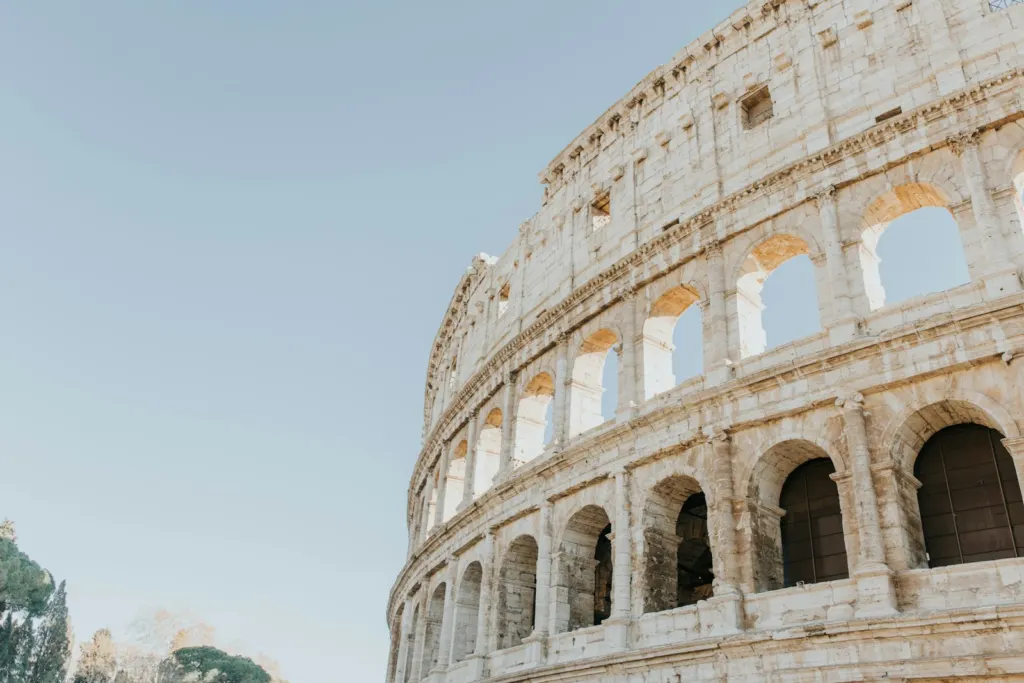
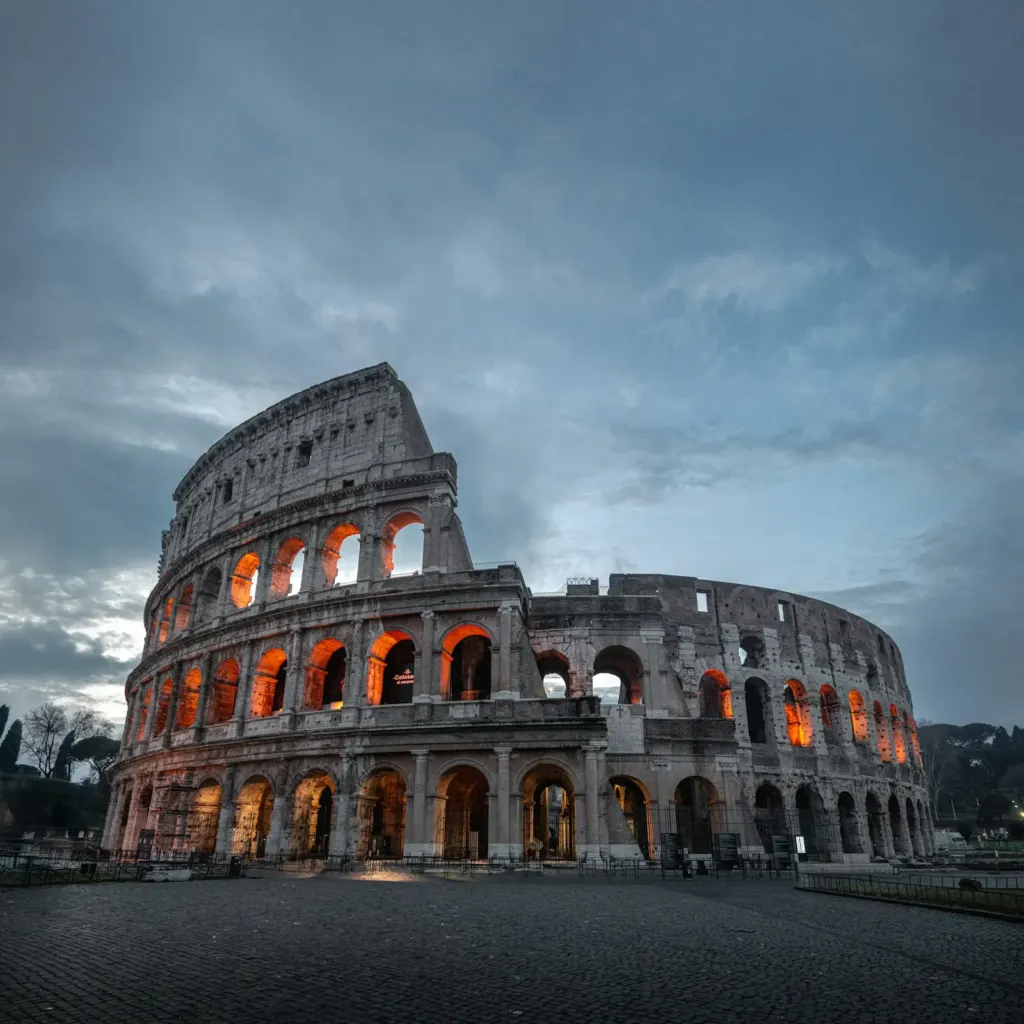
The Colosseum is an oval about 189 metres long and 156 metres wide, with an outer wall roughly 48 metres high. It is built mainly of travertine limestone, tuff and brick-faced concrete, held together in places with iron clamps. The three tiers of arches on the outside are framed by Doric, Ionic and Corinthian columns, a layering that you can still see on the surviving section of the outer wall.
The programme was more varied than the film version of gladiator fights. A typical day of games could include morning animal hunts (venationes), midday executions of condemned criminals, and afternoon gladiator combats between trained fighters with different equipment and styles. Gladiators were mostly slaves, prisoners of war or condemned men, though some free volunteers signed on. Fights did not always end in death, because a trained fighter was an expensive investment for the school that owned him.
Ancient authors also describe mock sea battles in connection with the opening games, but historians debate how and where those were staged, and whether they took place in the Colosseum itself. Treat claims about the arena being flooded with caution.
Gladiator fights continued until about AD 435, and animal hunts are recorded until at least AD 523, by which time the Western Roman Empire had collapsed and the building’s original purpose had faded away.
The popular belief that Christians were routinely fed to lions here is not supported by firm historical evidence for this specific site. Executions took place in amphitheatres, and Christians were persecuted at various times, but you should be wary of tour-guide generalisations. Pope Benedict XIV did consecrate the site to Christian martyrs in 1749 and had the quarrying stopped, and a cross stands in the arena area today.
Several things combined over more than a thousand years.
Conservation work has been continuous. A major restoration ran from 1993 to 2000, and a privately funded cleaning and repair of the facade took place from 2013 to 2016. Access to the upper two levels opened to guided visits in 2017.
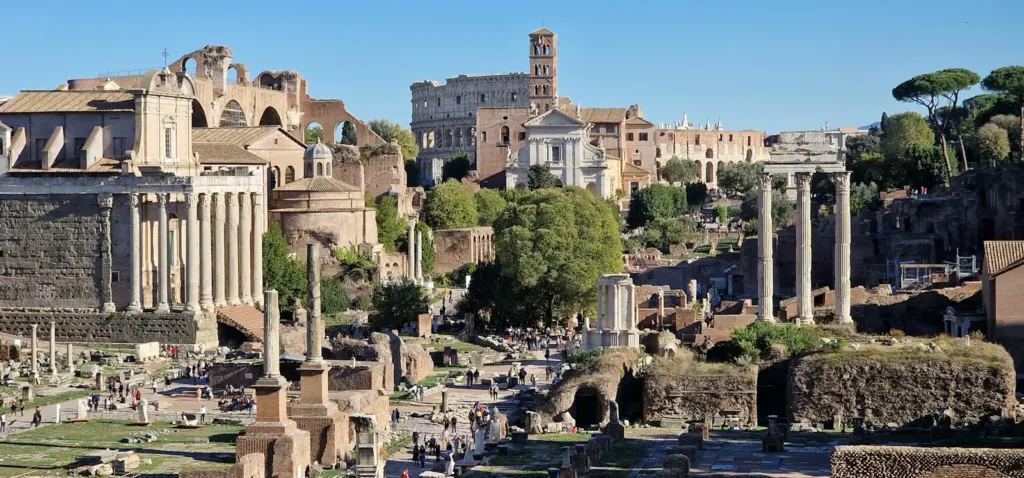
A standard visit lets you walk the ground-level corridors and the first tier (and, where open, the second), look down over the arena and the exposed hypogeum, and visit the exhibition spaces. The best views are from the upper level looking across to the Forum and the Arch of Constantine. Some areas, including the arena floor, the underground and the top tier, are covered by special-access tickets. Our guide to underground versus arena floor explains the difference, and the Colosseum underground and arena floor tour is the matching guided option.
Take Metro Line B to Colosseo, where the station exit faces the monument. Trams and buses also stop close by, and it is an easy walk from the Roman Forum, the Monti district and the Circus Maximus. For more on moving around the city, see our guide to getting around Rome by metro, bus, tram and on foot.
Colosseum entry is timed, and the official site (the Parco archeologico del Colosseo, colosseo.it) is the primary source for tickets. A standard ticket is combined with the Roman Forum and Palatine Hill, within a stated validity window, so plan those together. Slots can sell out days or weeks ahead in busy months. You cannot walk into the interior without a ticket, though you can freely walk around the outside and the surrounding streets. Some days have free entry under national rules, but those days are extremely busy; see free Sundays in Rome. Our explanation of skip-the-line tickets sets out what that label does and does not mean.
Check current details: prices, opening hours, last-entry times and ticket names change by season and year. Check the official site before you go, and compare the options on the Colosseum hub.
Expect airport-style security and a queue that is separate from the ticket queue. Large bags are not allowed in, and rules about bottles and tripods are enforced. Bring photo ID if you are booking a named or concession ticket.
Allow roughly one and a half to two hours for the interior, and more if you add the underground or arena floor. The Roman Forum and Palatine Hill need another two to three hours on top, which is why the most comfortable approach is to split the day or take a break between them. Our walk-through of how to visit the Colosseum, Forum and Palatine without the stress gives pacing options.
The first slot of the day and late afternoon are generally the quietest and coolest. From June to August the site is hot and exposed, so bring water, a hat and sun protection; see how to handle Rome in summer heat. Spring and autumn are the most comfortable seasons, and our month-by-month guide shows what each season is like. Evening visits are sometimes offered in summer; see Colosseum at night.
The stone is uneven, there are many steps and shade is limited. Lifts serve some levels for visitors who need step-free access, but check the official site for the current arrangements and how to arrange assistance. Wear flat, grippy shoes.
The Roman Forum and Palatine Hill are on the same ticket and are the natural continuation. The hillside district of Monti has cafes and small shops, and the Basilica of San Clemente, with its layers of Roman and medieval churches, is a short walk away. If you are building a wider plan, see Rome in one day. Families might look at gladiator school with kids for a hands-on introduction.
Emperor Vespasian began it around AD 70-72 on the site of Nero's drained lake, and his son Titus opened it in AD 80. Domitian later added the underground level and extra seating. It is named the Flavian Amphitheatre after the dynasty.
Estimates range from about 50,000 to 80,000 spectators, with an average often put near 65,000. Nobody knows precisely, because the seating plan has been partly lost and ancient sources are not exact.
Animal hunts, executions of condemned prisoners and gladiator combats. Gladiators were mostly slaves, prisoners or condemned men, and not every bout ended in death. Fights continued until about AD 435 and animal hunts until at least AD 523.
Plan on about one and a half to two hours inside, more if you add the underground or arena floor. Add two to three hours if you also visit the Roman Forum and Palatine Hill on the same ticket.
No. Interior entry requires a ticket, though you can walk around the outside freely. Free-entry days exist under national rules but are very crowded. Check the official site, colosseo.it, for current rules.
Fire, earthquakes (including one in 1349 that collapsed the outer south side) and centuries of stone robbing for other buildings. It was also reused as housing, workshops and a quarry before being protected in the 18th century.
No. The Colosseum is the amphitheatre; the Roman Forum was the civic centre of the ancient city. They are a short walk apart and are covered by the same combined ticket.
Related tours, guides and places.
A half-day tour in Rome runs up to about four hours, enough for one major site or one…
The standard ticket is right for most first-timers. Add the arena floor if you want to stand where…
Skip-the-line in Rome means pre-booked, usually timed entry that avoids the ticket-office queue, not a way past security…
The top thing to do in Rome is ancient Rome (Colosseum, Forum, Palatine), followed by the Vatican and…
A Rome tours guide is mostly a decision guide: pick the sights that need advance tickets, choose how…
Five days lets you see Rome's big sights, take one real day trip and finish slowly in the…